

Sonoma Coast Wine Country Guide
Sonoma Coast is a large, cool-climate AVA in western Sonoma County shaped by Pacific fog, wind, and varied coastal terrain. It is best known for Pinot Noir, Chardonnay, sparkling wines, and smaller amounts of cool-climate Syrah.
At a Glance
Key facts about the Sonoma Coast AVA.
AVAs with similar characteristics and wine styles.

About Sonoma Coast
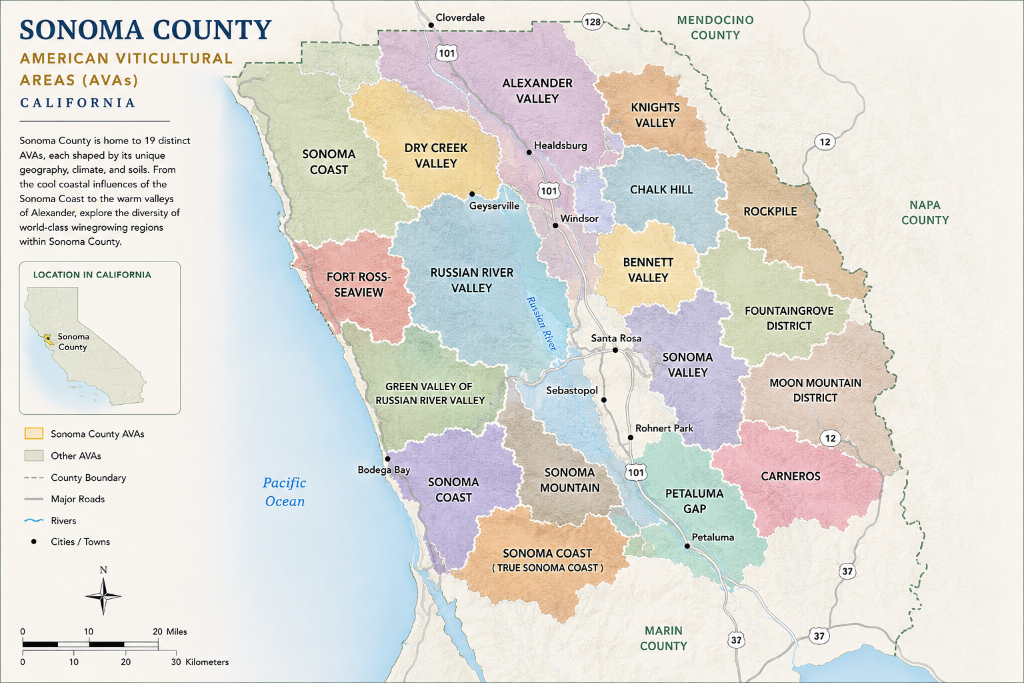
The Sonoma Coast AVA covers a broad section of western Sonoma County, from areas near San Pablo Bay and Petaluma north toward the Mendocino County line, with the Pacific Ocean as its defining influence. It is one of Sonoma County’s largest AVAs, and its size means conditions vary considerably: some vineyards sit on exposed coastal ridges, others in fog-cooled valleys near Sebastopol, Freestone, Occidental, and Bodega, and others in wind-driven areas now also identified with the Petaluma Gap and West Sonoma Coast AVAs. The region’s wines are generally associated with cool growing conditions, long ripening, and retained acidity. Pinot Noir often shows red cherry, cranberry, raspberry, tea, forest floor, and savory spice, with structure depending heavily on vineyard exposure. Chardonnay ranges from citrus-driven and mineral-edged to broader orchard-fruit styles, often with noticeable freshness. Sparkling wine producers value the area for Chardonnay and Pinot Noir with naturally high acidity. Cool-climate Syrah, where planted, tends toward pepper, dark fruit, olive, and savory notes rather than high alcohol richness. For visitors, Sonoma Coast is less centralized than Napa Valley or the Russian River Valley. Tasting rooms and vineyard estates are spread across rural roads, coastal hills, small towns, and winery facilities in Sebastopol, Healdsburg, Petaluma, and nearby communities. Some estates offer seated, appointment-based tastings with vineyard views; others pour wines from Sonoma Coast vineyards at urban or village tasting rooms. Driving times can be longer than distances suggest, especially near the coast where roads are winding and cell service may be inconsistent. The scenic character is a major part of the visit: fog banks, redwood groves, dairy pastures, ridge roads, and the Sonoma County coastline are all part of the setting. The AVA overlaps and surrounds several more specific subregions, so labels reading Sonoma Coast can represent very different vineyard sites. Visitors should pay attention to producer location and vineyard sources, especially if comparing wines from the broader Sonoma Coast with those from Fort Ross-Seaview, Petaluma Gap, or West Sonoma Coast.
Why Visit Sonoma Coast?
Click to expand map
Why Sonoma Coast Is One of California’s Most Famous Wine Regions
Signature Characteristics
What makes Sonoma Coast special.
Pacific-shaped climate
Fog, coastal wind, and cool temperatures extend the growing season and help preserve acidity in Pinot Noir, Chardonnay, and sparkling wine grapes.
Pinot Noir with site variation
Styles range from red-fruited and delicate to darker and more structured, depending on elevation, wind exposure, fog line, and vineyard location.
Chardonnay with freshness
Sonoma Coast Chardonnay often emphasizes citrus, apple, pear, and mineral or saline impressions, with oak use varying by producer.
Large AVA with smaller identities
The appellation includes varied terrain and overlaps with more specific coastal AVAs, so the Sonoma Coast name can represent many different vineyard settings.
Rural, spread-out visiting pattern
Tasting rooms and estate vineyards are dispersed across western Sonoma County, making advance planning more important than in compact wine districts.
Towns & Areas
Charming towns near the Sonoma Coast wine region.

Guerneville
A vibrant Russian River destination surrounded by redwoods, offering outdoor adventure, relaxation, and a welcoming community.

Sebastopol
A creative and eclectic town renowned for its organic farms, artisan culture, and small-town charm.
Most Popular Wineries
Top-rated wineries in the Sonoma Coast AVA.


Compare Nearby AVAs
Sonoma Coast is one of Sonoma County’s most celebrated wine regions. See how it compares to other nearby AVAs to help you choose the perfect destination for your wine country trip.
Sonoma Coast
Famous ForPinot Noir, Chardonnay, Sparkling Wine, Syrah, Pinot Meunier

Fort Ross – Seaview
Famous ForPinot Noir, Chardonnay, Syrah
The Sonoma Coast AVA is an expansive viticultural area defined by proximity to the Pacific Ocean and a predominantly cool maritime climate. Fort Ross – Seaview is a high-elevation sub-appellation located on ridges above the fog line, where vineyards receive more direct solar radiation.
Explore Fort Ross – SeaviewSonoma Coast
Famous ForPinot Noir, Chardonnay, Sparkling Wine, Syrah, Pinot Meunier

West Sonoma Coast
Famous ForPinot Noir, Chardonnay, Syrah
The Sonoma Coast AVA covers a large geographical area with varying levels of maritime influence and topography. The West Sonoma Coast AVA focuses on the most extreme coastal vineyards situated on high ridges directly overlooking the Pacific Ocean.
Explore West Sonoma CoastSonoma Coast
Famous ForPinot Noir, Chardonnay, Sparkling Wine, Syrah, Pinot Meunier

Green Valley
Famous ForPinot Noir, Chardonnay, Méthode Champenoise Sparkling Wine
The Sonoma Coast encompasses a massive, rugged territory defined by direct maritime exposure and significant elevation changes along the Pacific shoreline. Green Valley exists as a smaller, cool-climate pocket within the Russian River Valley, distinguished by persistent morning fog and well-drained Goldridge sandy loam soils.
Explore Green ValleySonoma Coast
Famous ForPinot Noir, Chardonnay, Sparkling Wine, Syrah, Pinot Meunier

Petaluma Gap
Famous ForPinot Noir, Chardonnay, Syrah, sparkling wine, coastal winds, cool-climate viticulture
The Sonoma Coast AVA encompasses a vast and diverse geographic region defined by proximity to the Pacific Ocean and high-elevation coastal ridges. The Petaluma Gap AVA is distinguished by persistent maritime winds that funnel through a coastal mountain opening to create high-acid wines with thickened grape skins.
Explore Petaluma GapSonoma Coast
Famous ForPinot Noir, Chardonnay, Sparkling Wine, Syrah, Pinot Meunier

Los Carneros (Sonoma)
Famous ForChardonnay, Pinot Noir, Sparkling Wines
The Sonoma Coast is a vast, rugged region defined by intense maritime influence and high-elevation vineyards producing lean, acid-driven wines. Los Carneros consists of low-lying clay-rich hills near San Pablo Bay that provide ideal conditions for traditional method sparkling wines and structured Chardonnay.
Explore Los Carneros (Sonoma)Sonoma Coast
Famous ForPinot Noir, Chardonnay, Sparkling Wine, Syrah, Pinot Meunier
Sta. Rita Hills
Famous ForPinot Noir, Chardonnay
The Sonoma Coast is a vast maritime region defined by high-elevation vineyards and rugged terrain that produce high-acid Pinot Noir and Chardonnay. Sta. Rita Hills is a compact transverse valley in Santa Barbara County characterized by intense wind and fog that result in highly concentrated cool-climate wines.
Explore Sta. Rita HillsCan’t decide? Explore all Sonoma County AVAs
Discover more wine regions and plan the perfect Sonoma County wine country adventure.
Featured Guides
Curated itineraries and travel guides for Sonoma Coast.

Where to Find Sonoma County's Best Mocktails
Discover Sonoma County's most creative mocktails, from botanical zero-proof cocktails and elegant resort lounges to wineries, rooftop bars, and chef-driven restaurants redefining alcohol-free hospitality.
Travel Guide
Ultimate Sonoma Coast Getaway
Explore the best Sonoma Coast experiences for travelers who want rugged scenery, coastal lodging, cool-climate wines, outdoor adventure, and memorable local dining. This guide highlights the beaches, trails, wineries, restaurants, and places to stay that make the Sonoma Coast one of Northern California's most distinctive wine country escapes.
Multi-Day Itinerary
A Perfect Day at the Sonoma Plaza
Discover the best places around Sonoma Plaza for wine tasting, dining, history, and walkable wine country charm. This guide highlights tasting rooms, restaurants, historic landmarks, and nearby accommodations that make Sonoma Plaza one of California's most accessible and rewarding wine country destinations without needing a car.
Travel Guide
Authentic Sonoma County
Discover authentic Sonoma County experiences rooted in family-owned wineries, boutique producers, historic sites, artisan food makers, and the relaxed agricultural character that defines the region. This guide highlights places that showcase Sonoma County beyond polished wine country, from small-production tasting rooms and heritage farms to local cheese, olive oil, and cultural landmarks.
Travel Guide
Best Luxury Wine Experiences in Sonoma County
Explore Sonoma County's best luxury wine experiences, from acclaimed estates and collector-focused tastings to elegant wineries known for exceptional hospitality, vineyard settings, and limited-production wines. This guide is designed for travelers seeking polished, high-touch wine country experiences with a strong sense of exclusivity and regional prestige.
Travel GuidePlan Your Visit
Everything you need to know before visiting Sonoma Coast.
Best Time to Visit
Spring, Summer & Harvest
Transportation
Rental car, private driver, or arranged wine tour are the most practical options. Uber and Lyft may work in larger towns such as Sebastopol, Petaluma, or Healdsburg but are unreliable on rural coastal roads.
Reservations
Recommended; often required for small estate wineries and seated tastings.
Wineries Per Day
2-4
Where to Stay
Sebastopol is a practical base for access to western Sonoma wineries, restaurants, and tasting rooms. Bodega Bay suits travelers prioritizing the coast, while Healdsburg offers more hotels and dining but may involve longer drives to coastal vineyards. Petaluma works well for the southern Sonoma Coast and Petaluma Gap area.
Sonoma Coast FAQs
Common questions about visiting Sonoma Coast.
What is the Sonoma Coast wine region known for?
The Sonoma Coast is world-renowned for producing exceptional, cool-climate Pinot Noir and Chardonnay. Because of its direct proximity to the Pacific Ocean, the region is defined by heavy maritime fog, persistent winds, and cooler temperatures compared to inland California. These conditions allow grapes to ripen slowly, preserving their natural acidity and creating wines with incredible balance, elegance, and distinct salinity. Beyond the wine, the area is famous for its dramatic coastal scenery, including rugged cliffs, hidden beaches, and towering redwood forests. It offers a more rustic, adventurous alternative to the traditional, manicured vineyard experience found elsewhere. Travelers visit not just for the high-end tasting rooms, but for the intersection of world-class viticulture and raw, natural beauty along the iconic Highway 1.
Is the Sonoma Coast worth visiting for a wine-focused vacation?
Yes, the Sonoma Coast is absolutely worth visiting, particularly for travelers who appreciate artisanal, site-specific wines and breathtaking natural landscapes. Unlike more commercialized wine regions, the Sonoma Coast offers a sense of discovery and tranquility. It is the ideal destination if you prefer boutique, family-run wineries over large corporate estates. The experience here is less about glitz and more about the connection between the land and the glass. Visitors can combine elite wine tastings with outdoor activities like coastal hiking, oyster tasting in nearby bays, and scenic drives. If you want to escape the crowds of Napa Valley and experience a more authentic, wild side of California wine country, the Sonoma Coast is a top-tier choice.
How does the Sonoma Coast compare to Napa Valley for visitors?
Sonoma Coast and Napa Valley offer vastly different experiences. Napa Valley is the heart of luxury wine tourism, characterized by grand estates, world-famous Cabernet Sauvignon, and a high-density of Michelin-starred restaurants. It is often more expensive and crowded. In contrast, the Sonoma Coast is rugged, spread out, and casual. The focus here is on cool-climate Pinot Noir and Chardonnay rather than bold reds. While Napa feels like a polished resort, the Sonoma Coast feels like a coastal adventure. You will find fewer crowds, more intimate tasting experiences, and a stronger emphasis on the natural environment. If you seek opulence and power, go to Napa; if you want elegance, coastal views, and a relaxed atmosphere, choose the Sonoma Coast.
What wines and grape varieties is the Sonoma Coast most famous for?
The Sonoma Coast is synonymous with premium Pinot Noir and Chardonnay. The region's cool, maritime climate is perfectly suited for these varieties, which thrive in the 'refrigerated' conditions provided by the Pacific Ocean. Sonoma Coast Pinot Noirs are celebrated for their bright acidity, moderate alcohol, and complex flavor profiles that often include wild strawberry, cherry, and earthy, forest-floor notes with a hint of sea salt. The Chardonnays are typically crisp and mineral-driven, moving away from the heavy, buttery styles of warmer regions toward a more lean, Burgundian elegance. While Pinot and Chardonnay dominate, you can also find exceptional cool-climate Syrah and small amounts of Riesling or Pinot Gris, all reflecting the region's signature freshness and maritime influence.
Where should travelers stay when exploring the Sonoma Coast?
Because the Sonoma Coast AVA covers a large area, your choice of lodging depends on your itinerary. For a true coastal experience, the towns of Bodega Bay and Jenner offer stunning oceanfront resorts and cozy inns like the Lodge at Bodega Bay or Timber Cove Resort. These are perfect for those who want to wake up to crashing waves. If you prefer a mix of forest and wine culture, Guerneville near the Russian River is a trendy spot with boutique hotels and cabins. For the most convenience and the best access to a wide variety of tasting rooms, shops, and restaurants, Sebastopol is the ideal 'base camp.' It sits at the edge of the AVA and serves as a vibrant gateway to the region's best vineyards.
What are the best wineries to visit on the Sonoma Coast?
When planning a visit, prioritize wineries that showcase the region's unique maritime terroir. Fort Ross Vineyard is a must for its high-elevation tasting room with sweeping ocean views. Flowers Vineyards & Winery offers a sophisticated, garden-like tasting experience at their 'House of Flowers' near Healdsburg, featuring estate-grown coastal fruit. For those seeking iconic, small-production wines, Littorai is a leader in biodynamic farming, while Hirsch Vineyards is legendary for its remote, rugged site (though they often host tastings in more accessible locations). Other excellent stops include Peay Vineyards, Wayfarer, and Small Vines. Because many of these are boutique operations, it is essential to check if they have a public tasting room or require a private appointment in advance.
How many wineries can you realistically visit in one day on the Sonoma Coast?
We recommend visiting no more than two or three wineries per day on the Sonoma Coast. Unlike more compact regions where tasting rooms are side-by-side, the Sonoma Coast is geographically expansive with winding, two-lane roads that require careful navigation. The drive between a coastal vineyard and an inland tasting room can easily take 45 minutes to an hour. Rushing through this region defeats the purpose of visiting; the scenic beauty of the drive is a major part of the draw. A perfect day might include a morning tasting near the coast, a long lunch in a seaside village, and one final afternoon tasting. Giving yourself extra time allows you to pull over for photos and enjoy the relaxed pace of coastal life.
What is the best time of year to visit the Sonoma Coast?
The 'Secret Summer' of September and October is widely considered the best time to visit the Sonoma Coast. During these months, the thick summer fog typically clears, providing the sunniest days and the most spectacular, unobstructed ocean views. It is also harvest season, so the vineyards are bustling with activity. Spring (April and May) is also beautiful, characterized by vibrant green hills and wildflowers, though it can be quite windy. While summer is popular, it is often cooler and foggier than visitors expect due to the 'marine layer.' Winter is the quietest season, offering a moody, romantic atmosphere perfect for storm watching and cozying up by a fire, though some smaller wineries may have reduced seasonal hours.
Do Sonoma Coast wineries require reservations for tastings?
Yes, reservations are highly recommended and often mandatory for most wineries in the Sonoma Coast region. Because many of the top producers are small, family-owned operations, they focus on providing an intimate, seated experience rather than a traditional walk-up bar service. These spots have limited capacity and can fill up weeks in advance, especially on weekends. Furthermore, because the wineries are spread out, you do not want to drive a long distance only to find a tasting room is fully booked. Most wineries use online booking platforms like Tock or CellarPass, making it easy to secure your spot. Planning your itinerary and booking at least 2-4 weeks ahead of time will ensure a smooth and stress-free trip.
How does the Sonoma Coast compare to the nearby Russian River Valley?
While the Sonoma Coast and Russian River Valley are neighbors and both specialize in Pinot Noir and Chardonnay, they offer different wine styles and environments. The Russian River Valley is slightly more inland and warmer; while it gets fog, it also sees more afternoon heat, resulting in richer, fruitier, and more lush wines. The Sonoma Coast is significantly cooler and windier because it is right on the ocean. This 'extreme' climate produces wines with higher acidity, more mineral notes, and a leaner profile. For a traveler, the Russian River Valley feels like a lush, pastoral river basin with towering redwoods, while the Sonoma Coast feels more like a rugged, maritime frontier. Both are world-class, but the Coast is for those seeking more 'tension' in their wine.
Is the Sonoma Coast a family-friendly destination?
The Sonoma Coast is very family-friendly, though the appeal lies more in outdoor adventure than in the tasting rooms themselves. While some high-end wineries are adult-only or require a quiet atmosphere, many have outdoor seating where well-behaved children can relax. The real draw for families is the wealth of non-wine activities. You can spend the day beachcombing at Goat Rock Beach, exploring the tide pools at Shell Beach, or hiking among giant trees at Armstrong Redwoods State Natural Reserve. Towns like Bodega Bay and Sebastopol offer casual, family-friendly dining options and local parks. It is a fantastic destination for parents who want to balance sophisticated wine tasting with active, nature-focused experiences that keep children entertained and engaged.
Can I visit the Sonoma Coast on a day trip from San Francisco?
Yes, it is possible to visit the southern part of the Sonoma Coast on a day trip from San Francisco, as the drive to towns like Bodega Bay or Sebastopol takes about 75 to 90 minutes. You could easily enjoy a coastal hike, a seafood lunch, and two wine tastings before heading back to the city. However, if you want to explore the 'True Sonoma Coast'—the more remote, northern areas like Jenner or Fort Ross—a day trip can feel very rushed due to the long, winding roads. To fully experience the depth of the region and avoid spending all your time in the car, we recommend an overnight stay. Two full days allow you to explore both the shoreline and the inland vineyards at a much more enjoyable pace.
Explore More Regions
View all regionsAdelaida District
The Adelaida District is a high-elevation AVA in northwest Paso Robles defined by its rugged Santa Lucia Range terrain, calcareous limestone soils, and significant maritime influence.
Alisos Canyon
Alisos Canyon is a 5,774-acre AVA in Santa Barbara County, established in 2020. It is defined by its position between the Santa Maria Valley and the Santa Ynez Valley, specializing in concentrated Syrah and Rhone-style wines grown on sandstone and shale soils.

Atlas Peak
Atlas Peak is a high-elevation Napa Valley AVA on the western slopes of the Vaca Range, east of the city of Napa. It is best known for mountain-grown Cabernet Sauvignon from volcanic, well-drained sites above much of the valley fog.
Ballard Canyon
Ballard Canyon is a small, north-south oriented AVA in the Santa Ynez Valley of Santa Barbara County. It is specifically recognized for its focus on Syrah and other Rhône varieties grown in a transitional climate.

Calistoga
Calistoga is Napa Valley’s northernmost AVA, centered on the town of Calistoga and shaped by a warm valley-floor climate with strong nighttime cooling. It is best known for structured Cabernet Sauvignon, ripe Zinfandel, and smaller plantings of Syrah, Petite Sirah, and Charbono.

Carneros
Los Carneros is the cool, bay-influenced AVA at the southern end of Napa and Sonoma, known for Chardonnay, Pinot Noir, and sparkling wine. Fog, wind, and a long growing season give its wines higher acidity and more restrained fruit than much of inland Napa Valley.

Chiles Valley District
Chiles Valley District is a small, rural AVA in the eastern hills of Napa Valley, known mainly for Cabernet Sauvignon, Zinfandel, and other mountain-influenced red wines. Its higher elevation, cooler nights, and relative isolation distinguish it from the warmer, more developed Napa Valley floor.

Coombsville
Coombsville is a cool, maritime-influenced Napa Valley AVA east of the city of Napa, best known for Cabernet Sauvignon and Bordeaux varieties with freshness, structure, and restrained fruit. Its rolling volcanic hills and proximity to San Pablo Bay distinguish it from warmer up-valley Cabernet districts.

Curated by Wine Country Experts
Our guides are written by local wine experts and updated regularly to ensure you get the most accurate and helpful information for your wine country adventure.
Guest Reviews
We analyze thousands of verified guest reviews to understand real experiences and consistent satisfaction.
Booking Popularity
We evaluate booking and reservation trends to spot the most sought-after places and experiences.
Regional Significance
We prioritize businesses that represent the unique character, heritage, and communities of Sonoma County.
Wine Quality
Our team looks for outstanding wine programs, high-quality offerings, and recognition from trusted industry sources.
Local Expert Recommendations
Our local experts personally visit and vet each recommendation to ensure it meets our standards.
Trusted. Local. Unbiased.
We do not accept payment from businesses for placement. Our recommendations are independent and always focused on helping you have exceptional wine country experiences.